PVC Fencing
Fig Tree Pocket.
4069
Outer-western Brisbane riverbend peninsula with large semi-rural lots, Lone Pine on the doorstep, and koala-corridor habitat that shapes every boundary decision.
Fig Tree Pocket
Fig Tree Pocket sits inside a tight peninsula of the Brisbane River about eight kilometres west of the CBD, surrounded by water on two sides and reached by a single arterial through Kenmore. The suburb has never been thoroughly subdivided. Lone Pine Koala Sanctuary, established in 1927, sits on the riverbend at its eastern end, and most of the residential footprint is unusually large by Brisbane standards, with detached homes on lots of 2,000 to 5,000 square metres and a meaningful share of true acreage. The semi-rural feel is the defining character, and the fence decisions that follow have a different texture to anything in the inner west. Side boundaries on a 4,000 square metre block are often 60 to 100 metres long. Tree-protected corridors run through the suburb under both the Significant Landscape Tree overlay and the koala-habitat layers in City Plan. The Cotswold post-and-rail range solves the semi-rural look on long runs; the Ascot privacy panel handles the shorter house-zone boundaries where screening matters.
Fig Tree Pocket streetscape
How Fig Tree Pocket fences.
Housing stock
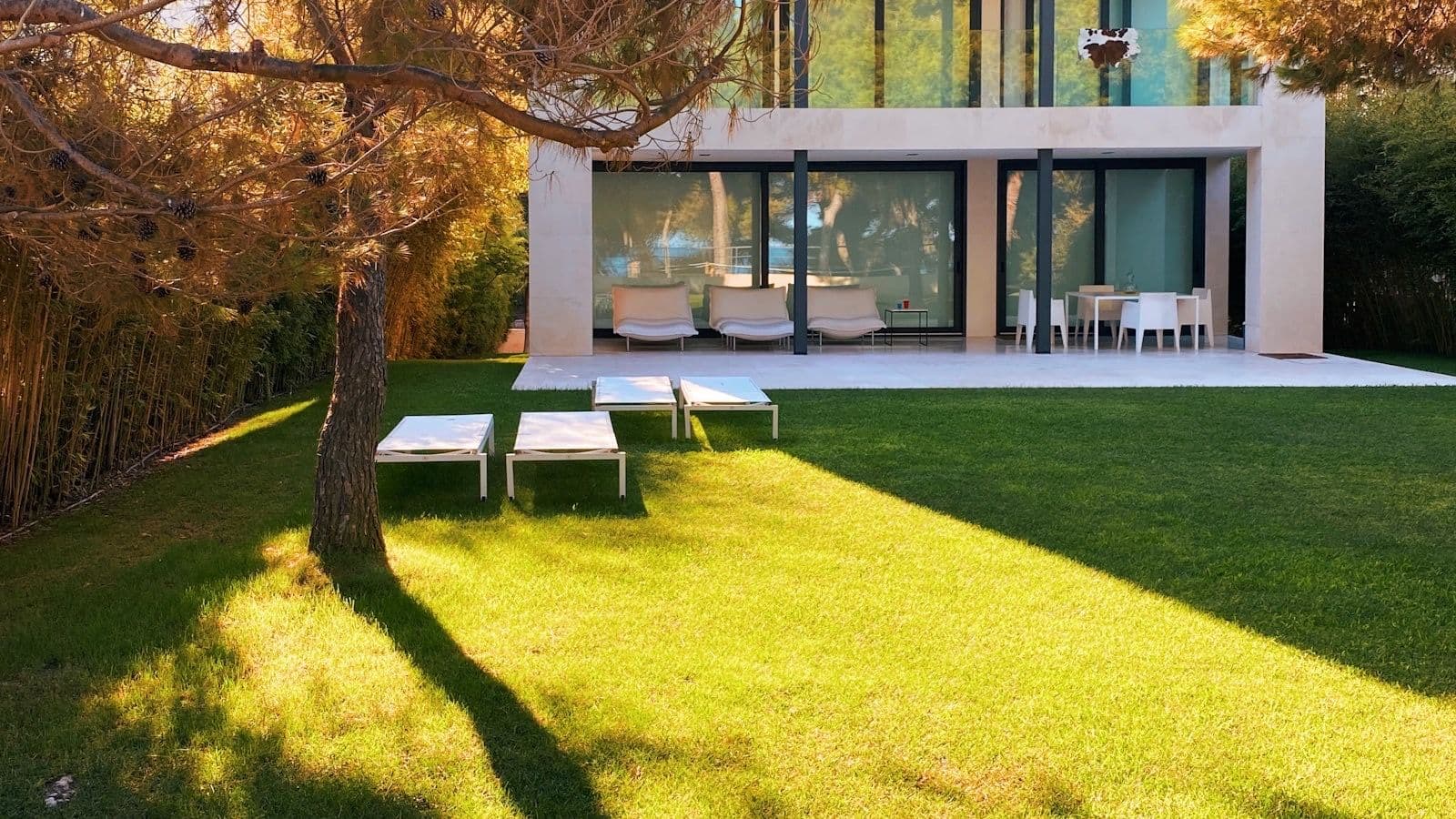
Fig Tree Pocket's housing is a mix of original 1960s and 1970s acreage homes (generally brick-and-tile, single-storey, set well back from quiet streets) and a layer of more recent contemporary rebuilds on the same large lots, often two-storey with significant glazing facing the river or the bushland reserves.
Acreage lots
Lots on the river edge typically run between 2,000 and 5,000 square metres; lots further from the river start around 1,500 square metres but reach genuine acreage on Greendale Way, Mereworth Drive, and the more remote streets.
Common fence jobs
Fence-replacement scenarios here are unlike anything in standard Brisbane. The most common is replacing kilometres of original chain-wire or timber post-and-rail that the first owners installed when the lot was carved out of the original orchards. The second is establishing a screening boundary between the residential house zone and the rear of an acreage that has been left to revegetate as bushland. The third is rebuilding a pool boundary on a property where the pool was originally fenced with timber that has rotted out.
Tree canopy
Fences on Fig Tree Pocket lots also frequently interact with the established tree canopy. Significant figs, jacarandas, and eucalypts grow on or near boundaries, and the post hole placement has to respect their root protection zones rather than augering through them. We mark proposed post positions on a survey before excavation when significant trees are involved.
PVC fencing considerations for Fig Tree Pocket
Council and approvals
Fig Tree Pocket is inside Brisbane City Council under Brisbane City Plan 2014. Side and rear dividing fences up to 1.8 metres are exempt from development approval, with fences above 2 metres requiring certification under the Queensland Building Act 1975.
Tree and koala overlays
The overlay considerations on these lots are denser than most Brisbane suburbs: large parts of Fig Tree Pocket sit under the Biodiversity Areas overlay, the Significant Landscape Tree overlay, and the koala-habitat protection layers, and Fig Tree Pocket is within Brisbane's recognised koala corridors and habitat patches. Post holes within the root protection zone of a listed significant tree need an arborist's sight and frequently a separate clearing approval.
Bushfire boundaries
Bushfire-overlay coverage is patchy but real on the south-western edges of the suburb where bushland sits against the residential boundary. On a property genuinely against a bushfire-overlay boundary we will not specify PVC for that run because PVC is not BAL-rated and will melt under flame contact; Colorbond or a certified non-combustible system is the appropriate choice. For internal and street-side boundaries on the same property, PVC is appropriate and the Cotswold post-and-rail at 1.5 or 1.9 metres is the visual match for the semi-rural character.
Pools and cost-sharing
Pool fences must meet AS 1926.1-2012. Cost-sharing between adjoining owners sits under the Neighbourhood Disputes (Dividing Fences and Trees) Act 2011 (Qld).
The Collection
Five ranges, delivered to Fig Tree Pocket.
Every PVC fencing range is supplied and delivered to Fig Tree Pocket. Every price includes GST.
Henley
Picket Fencing
From $130.34 a section
From $130.34 a section
Oxford
Semi-Privacy Fencing
From $243.80 a section
From $243.80 a section
Eton
Closed-Top Fencing
From $255.44 a section
From $255.44 a section
Ascot
Full Privacy Fencing
From $243.58 a section
From $243.58 a section
Cotswold
Horse & Farm Fencing
From $97.75 a section
From $97.75 a section
Delivery
Delivered to Fig Tree Pocket.
We deliver PVC fencing to Fig Tree Pocket and every other Brisbane suburb. Each order is palletised for safe transit and needs someone on site to receive it. Regional lead times and coverage are on the PVC fencing Brisbane page.
- Estimated delivery
- 3-5 business days metro, 5-7 days outer suburbs
Pricing
Pricing for Fig Tree Pocket.
Prices are identical across every Brisbane suburb, so there is no location surcharge for Fig Tree Pocket. What you see online is what you pay, GST included.
Questions
PVC fencing Fig Tree Pocket, answered.
- We have significant trees on the boundary line. Can a PVC fence be installed without harming them?
- Yes, with planning. Post holes for PVC fencing are typically 300 millimetres wide and 600 millimetres deep at 2.44 metre centres, which is less intrusive than a continuous concrete strip footing. Where a protected or significant tree sits on or near the boundary, the installer hand-digs post holes rather than augering, and shifts post positions slightly to avoid structural roots. If the tree is listed on the Brisbane City Plan Significant Landscape Tree overlay, you need a separate clearing approval before any post hole within the root protection zone. We can mark the proposed post positions on a survey and have an arborist sight them before excavation. This is a common requirement on Fig Tree Pocket lots and a normal part of the install workflow here.
- What fence suits the semi-rural look of a 4,000-square-metre Fig Tree Pocket lot?
- The Cotswold three-rail post-and-rail at 1.3 metres is the visual match for the semi-rural character of Fig Tree Pocket. It is a PVC version of the classic white timber post-and-rail that Fig Tree Pocket has worn since the original acreage subdivisions, with the difference that it will never need repainting and will not splinter, rot, or attract termites. The Cotswold is the standard call for street frontages and for the long runs between the residential house zone and the bushland portion of the lot. The Ascot privacy or Oxford semi-privacy at 1.8 metres handles the shorter screened boundaries between houses and pool zones.
- Our property backs onto koala habitat. Are there fencing restrictions?
- Yes. Fig Tree Pocket sits inside Brisbane's recognised koala habitat layers, and fencing in those areas should not block koala movement at ground level. Solid fences with a flush base prevent koalas from passing under, which fragments their movement through the corridor. The standard advice on a koala-corridor boundary is either a wildlife-friendly fence with a deliberate ground gap or a post-and-rail style fence like the Cotswold that allows ground-level passage. For the rear boundary of a koala-habitat property the Cotswold is the appropriate choice; for the side boundaries between residential lots the standard Ascot or Oxford is fine because the inter-lot space is not a habitat corridor.
- How does the riverbend humidity affect PVC compared to timber?
- The river-bend air on the Fig Tree Pocket peninsula sits at higher humidity for more of the year than the inner-west ridges. Timber fencing in that microclimate rots at the bottom rail faster, holds moisture in the grain longer between wet and dry seasons, and tends to grow algae or mould on the south-facing face. PVC is inert in that environment: it does not absorb moisture, it does not host mould growth in the material itself (any surface algae wipes off with a hose), and the bottom rail does not rot regardless of how wet the ground beneath sits. For long boundary runs in the riverbend microclimate the cost-over-time comparison strongly favours PVC.
- What height pool fence suits a Fig Tree Pocket property?
- AS 1926.1-2012 sets a minimum height of 1.2 metres for a pool barrier with a 100 millimetre maximum gap and a 900 millimetre non-climbable zone preserved around the outside. Most Fig Tree Pocket pool installations sit at 1.5 to 1.8 metres for additional visual privacy from neighbours and from the bushland sides of the property. The Ascot full privacy at 1.8 metres is a common call for pool-zone privacy where the pool is set away from the bushland edge. For pools that face the river or the bushland, owners often want a more transparent boundary that preserves the view, in which case the Oxford semi-privacy at 1.8 metres reads more open while still meeting the non-climbable zone requirement.
Nearby
Nearby in Brisbane.
- Adjacent 1970s family suburb with smaller lots and similar bushland-edge considerations in Kenmore
- Inner-west neighbour with hillier blocks and catchment housing in Indooroopilly
- Adjacent westside suburb with significant Brisbane River flood overlay in Jindalee
- Bushland-edge outer-west suburb with significant bushfire-overlay coverage in The Gap
Ready when you are
Get PVC fencing in Fig Tree Pocket.
Draw your fence on a map of your Fig Tree Pocket property and see every panel, post, and cap priced line by line before you spend a cent.