PVC Fencing
Brassall.
4305
Established western Ipswich suburb with a mix of older Queenslanders and 1950s-70s family homes on larger lots, where termite resistance and budget both shape the fence brief.
Brassall
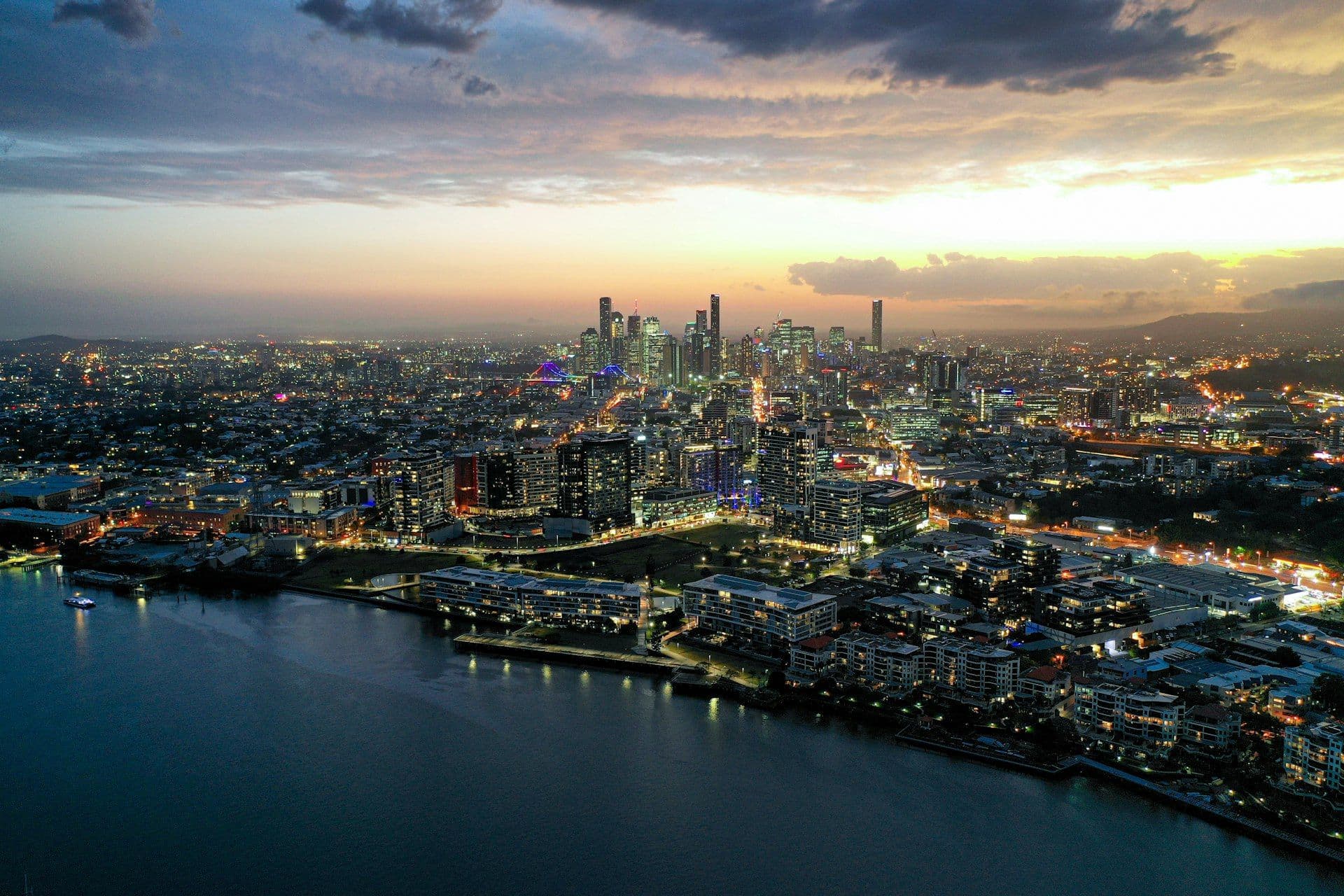
Brassall sits on the western edge of the Ipswich CBD, about 40 kilometres west of central Brisbane and a couple of kilometres from the Ipswich civic core. The suburb developed in waves: a 19th-century rural settlement that became a residential extension of Ipswich through the early-to-mid 20th century, followed by post-war family-home subdivisions and a steady trickle of infill since. The result is a mixed-era streetscape where a 1900s Queenslander on a 1,000-square-metre block can sit two doors down from a 1960s brick-veneer cottage on a 700-square-metre block and a 2010s renovation on a third pad. Lots are generally larger than in the Greater Springfield growth corridor, because the suburb was not master-planned and the original subdivisions were generous by contemporary standards, which gives Brassall fence runs more linear metres on average. Termite pressure across Ipswich is high and the older timber-cottage and post-war timber-and-fibro stock in Brassall is among the most exposed, so the PVC case for replacing 50-plus-year-old paling fencing is strong here.
Brassall streetscape
How Brassall fences.
Four eras of housing
Brassall's housing stock spans four distinct eras with no single dominant style. The oldest residential streets carry late-1800s and early-1900s timber Queenslanders, typically on 800 to 1,200 square metre blocks with mature gardens. The post-war wave from the late 1940s through the 1960s added timber-and-fibro and early brick-veneer cottages on similar lot sizes. The 1970s and 1980s brought brick-and-tile project housing on slightly smaller blocks of 600 to 800 square metres, and the most recent layer is contemporary project housing and renovation activity on subdivided original blocks.
Reposition phase
Average house values in Brassall have risen sharply in the past 12 months, with house values up about 15.5 per cent. That is a sign the suburb is well into a reposition phase, with established stock changing hands and being upgraded.
The common job
The defining fence-replacement scenario is a 1960s or 1970s hardwood paling fence on the side or rear boundary of a post-war cottage, where the original posts have rotted at the base, the palings have lost their straight edge, and the homeowner has decided not to repaint timber for another decade. The Ascot 1.8 metre is the standard replacement, and Henley pickets suit the front yards of the older Queenslander stock.
PVC fencing considerations for Brassall
Approvals & heights
Brassall is within the Ipswich City Council local government area and governed by the Ipswich Plan 2024 (adopted as Ipswich City Plan 2025, effective 1 July 2025). Side and rear dividing fences up to 2 metres on a residential lot do not require planning approval. Front fences under the residential code are capped at 1.2 metres. Anything above 2 metres triggers Amenity and Aesthetics approval and a building certifier under the Queensland Building Act 1975.
No character overlay
Brassall does not carry a formal character-overlay equivalent to the Brisbane City Plan's Traditional Building Character Overlay, so heritage-style fencing is a personal and streetscape choice rather than a regulatory requirement on most lots.
Flood, termite & budget
Some pockets of Brassall, particularly closer to the Bremer River and downstream drainage corridors, carry flood-overlay coverage under the Ipswich Plan flood hazard overlay. These are a minority of lots but should be confirmed with an Ipswich City Council Flood Search before specifying. For most of the suburb the controlling factors are termite pressure and budget. Pool fences must meet AS 1926.1-2012, and cost-sharing with neighbours runs under the Neighbourhood Disputes (Dividing Fences and Trees) Act 2011.
The Collection
Five ranges, delivered to Brassall.
Every PVC fencing range is supplied and delivered to Brassall. Every price includes GST.
Henley
Picket Fencing
From $130.34 a section
From $130.34 a section
Oxford
Semi-Privacy Fencing
From $243.80 a section
From $243.80 a section
Eton
Closed-Top Fencing
From $255.44 a section
From $255.44 a section
Ascot
Full Privacy Fencing
From $243.58 a section
From $243.58 a section
Cotswold
Horse & Farm Fencing
From $97.75 a section
From $97.75 a section
Delivery
Delivered to Brassall.
We deliver PVC fencing to Brassall and every other Ipswich suburb. Each order is palletised for safe transit and needs someone on site to receive it. Regional lead times and coverage are on the PVC fencing Ipswich page.
- Estimated delivery
- 3-5 business days
Pricing
Pricing for Brassall.
Prices are identical across every Ipswich suburb, so there is no location surcharge for Brassall. What you see online is what you pay, GST included.
Questions
PVC fencing Brassall, answered.
- My Brassall block is 900 square metres and the boundary fence is long. How does PVC cost out on a larger lot?
- PVC's per-metre cost is broadly comparable to a quality hardwood paling install over a long boundary run. The unit economics favour PVC further as the run gets longer, because the labour rate per metre falls on a long straight install and the material cost stays linear. On a 900-square-metre Brassall block with around 60 to 70 lineal metres of boundary fence, an Ascot 1.8 metre install will sit in a similar total cost range to a like-for-like new hardwood replacement, but the 25-year service life of PVC compared to the 10 to 15 year typical service life of timber means the total-cost-of-ownership over the next quarter century is meaningfully lower with PVC.
- Does Brassall have a character overlay that restricts what I can put at the front?
- No. Ipswich City Council does not maintain an equivalent to the Brisbane City Plan Traditional Building Character Overlay across Brassall, and the standard Ipswich Plan residential code applies: front fences up to 1.2 metres without approval. The choice of fence style for the front of an older Brassall Queenslander is therefore a streetscape and personal preference question, not a regulatory one. The Henley picket in white at 1.2 metres is a common choice because it matches the visual vocabulary of the older housing stock; the Oxford or Eton at 1.2 metres heights are alternatives where a contemporary front fence is preferred. Individual heritage-listed properties (rare in Brassall) carry their own rules and should be checked with council before ordering.
- Why is termite resistance so important for a Brassall fence?
- The combination of older timber housing stock and the broader Ipswich termite-pressure environment makes the boundary fence a particularly exposed timber element. Older Brassall cottages have typically been inspected, baited, and treated for termites at intervals across their service life; the hardwood paling fence in the same yard is usually outside that management envelope. Posts rotting in the ground attract termite activity that then bridges to the rails and the palings. PVC fencing removes the entire boundary fence from the termite ecosystem because there is no organic material to digest. For a homeowner already managing termites on the house, eliminating one major exposed timber asset is a measurable reduction in risk and ongoing inspection scope.
- What PVC range is best for the rear boundary of a Brassall acreage-style block?
- For a larger Brassall block (800-plus square metres) where the rear boundary backs onto another residential property, the Ascot 1.8 metre full privacy is the standard specification. It provides complete visual privacy and uses the same 127 millimetre post system as the side runs. Where the rear backs onto open paddock, drainage easement, or rural-residential land, the Oxford 1.8 metre semi-privacy is sometimes preferred because the spaced slats let the air through and reduce wind loading on a long open-exposure run. For genuinely rural rear boundaries that border paddock or stock, the Cotswold post-and-rail range in white provides a low-key boundary marker without the visual mass of a full privacy fence.
- Is the local soil in Brassall reactive in a way that affects fence post footings?
- Parts of Ipswich sit on reactive clay soils that move with wet-dry cycles, and Brassall has variable soil conditions across the suburb, predominantly clay-influenced rather than the sandy soils common closer to the coast. Standard PVC post footings (typically 600 millimetre deep, 300 millimetre wide concrete pads at 2.44 metre centres) are sized for moderately reactive soils and perform reliably across most of Brassall. On lots with notably reactive soil or significant slope, the installer will extend the footing depth and may recommend galvanised aluminium reinforcement inserts in gate posts and corner posts to manage the additional load. A site survey before ordering identifies whether the standard footing spec is adequate or needs to be uplifted.
Nearby
Nearby in Ipswich.
Ready when you are
Get PVC fencing in Brassall.
Draw your fence on a map of your Brassall property and see every panel, post, and cap priced line by line before you spend a cent.