PVC Fencing
Clayfield.
4011
Affluent inner-north Queenslander suburb on leafy streets where heritage-listed homes and a strong character overlay define the front-fence brief.
Clayfield
Clayfield is the inner-north's character suburb. Approximately seven kilometres from the CBD, the streets carry one of Brisbane's strongest concentrations of intact prewar Queenslanders and interwar residences, with mature jacaranda and poinciana canopies that have grown together over a century of unbroken streetscape. Brisbane City Council's Traditional Building Character Overlay covers a large share of Clayfield's residential streets, and the suburb's heritage register lists individual properties on several of the original boulevards. That density of character treatment shapes the fencing brief sharply. A front fence on a Clayfield character lot is a small civic act: it sits inside a streetscape that the overlay was specifically written to protect, and it has to read as part of the pre-1947 visual order. The Henley picket range was designed against exactly this brief.
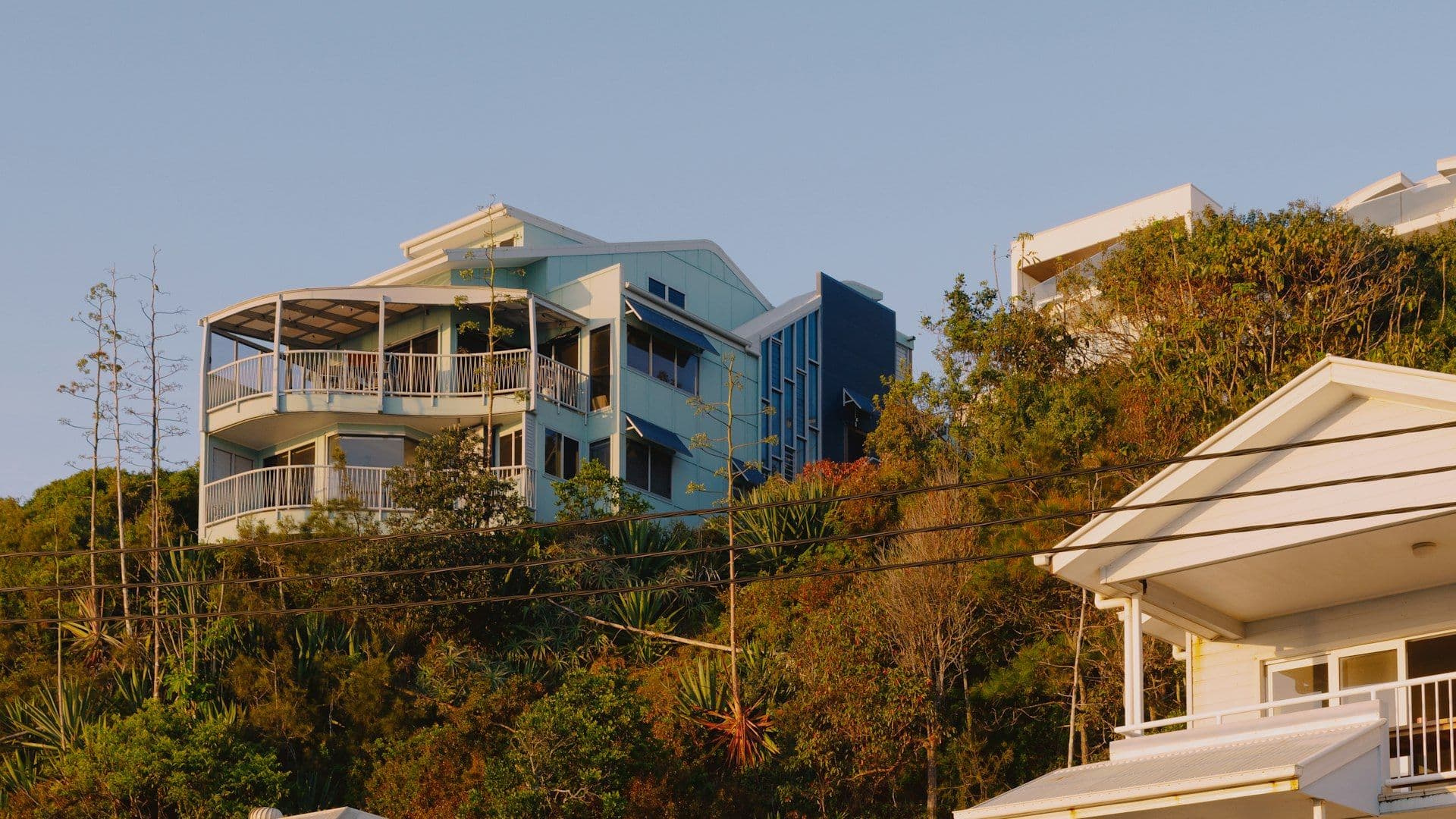
Clayfield streetscape
How Clayfield fences.
Housing stock
Clayfield's housing stock is dominated by prewar Queenslanders on high stumps and interwar timber and brick residences with verandahs, mature gardens, and consistent street setbacks. Lots typically run 600 to 900 square metres with frontages of 15 to 22 metres, and the dominant streetscape rhythm is timber and tin punctuated by the heavier masonry of the interwar houses.
Heritage and character
A meaningful share of the stock is individually heritage-listed, and a larger share sits within the Traditional Building Character Overlay. Alongside the prewar and interwar stock, Clayfield carries substantial mid-century and late-twentieth-century brick housing on streets where the character coverage thins out, and a small share of contemporary infill where Council has permitted larger-scale work outside the overlay.
Terrain
Topography ranges from level lots in the southern parts of the suburb to gently elevated streets toward Hendra and Wooloowin.
Common fence jobs
The two defining fence scenarios in Clayfield are a heritage-sympathetic front fence on a character lot, where the overlay applies and the streetscape expectation is exact, and a tall rear boundary on a deeper block, where mature trees, established gardens, and the proximity of two-storey neighbours all influence the screening requirement.
PVC fencing considerations for Clayfield
Character overlay
Clayfield is in Brisbane City Council and governed by Brisbane City Plan 2014, with the Traditional Building Character Overlay applying to a large share of the residential lots. The overlay's Design Code requires that street-facing fencing on a character lot is low, visually permeable, and complementary to the pre-1947 streetscape: in practical terms, a vertical-picket profile at around 1.2 metres in a heritage-appropriate colour. The Henley range, in any of its three picket profiles, satisfies the brief.
Heritage-listed lots
Lots that are individually heritage-listed sit under a stricter regime. The Heritage Place Code adds requirements beyond the character overlay, and any new fence on a heritage-listed property should be confirmed with a Council planner or the property's architect before ordering.
Approvals and cost-sharing
Side and rear dividing fences up to 2 metres are exempt from a development application under the City Plan; above 2 metres requires a building certifier under the Queensland Building Act 1975. Cost-sharing on dividing fences is governed by the Neighbourhood Disputes (Dividing Fences and Trees) Act 2011.
Pools and vegetation
Pool fences must meet AS 1926.1-2012, including the non-climbable zone requirement that catches a lot of older Clayfield pool barriers built before the current standard came in. The Vegetation Protection Overlay also covers parts of Clayfield's streetscape, which affects excavation near mature street trees during fence installation.
The Collection
Five ranges, delivered to Clayfield.
Every PVC fencing range is supplied and delivered to Clayfield. Every price includes GST.
Henley
Picket Fencing
From $130.34 a section
From $130.34 a section
Oxford
Semi-Privacy Fencing
From $243.80 a section
From $243.80 a section
Eton
Closed-Top Fencing
From $255.44 a section
From $255.44 a section
Ascot
Full Privacy Fencing
From $243.58 a section
From $243.58 a section
Cotswold
Horse & Farm Fencing
From $97.75 a section
From $97.75 a section
Delivery
Delivered to Clayfield.
We deliver PVC fencing to Clayfield and every other Brisbane suburb. Each order is palletised for safe transit and needs someone on site to receive it. Regional lead times and coverage are on the PVC fencing Brisbane page.
- Estimated delivery
- 3-5 business days metro, 5-7 days outer suburbs
Pricing
Pricing for Clayfield.
Prices are identical across every Brisbane suburb, so there is no location surcharge for Clayfield. What you see online is what you pay, GST included.
Questions
PVC fencing Clayfield, answered.
- Will Brisbane City Council reject a PVC picket fence on a Clayfield character lot?
- The Traditional Building Character Overlay code specifies the visual outcome (low, vertical pickets, period-appropriate proportions, traditional colour) rather than the material. PVC pickets that match the proportions, spacing, and colour of a traditional timber picket fence are generally accepted by Council assessors as complying with the overlay's intent. Where assessments have run into trouble is when the proposed fence diverges from those proportions: tall slat designs, unusually wide pickets, or non-traditional colours read as inconsistent with the streetscape and attract closer scrutiny. The Henley range at 1.2 metres in white reads as a traditional picket fence from the street and is the safest path through the overlay assessment.
- Our Clayfield house is individually heritage-listed. Does that change anything?
- Yes, materially. A heritage-listed property sits under the Heritage Place Code in Brisbane City Plan 2014, which is stricter than the character overlay that applies to the surrounding streetscape. New fence work on a heritage-listed property generally requires a development application and assessment against the heritage code, and the assessor looks at material authenticity as well as visual proportions. PVC pickets may still be acceptable, but the case has to be made on a property-specific basis with the assessor, often through a Statement of Heritage Impact prepared by a qualified consultant. A timber picket may be the safer path on a heritage-listed property; the Henley is more naturally applied to character-overlay lots where the test is the visual outcome.
- Can I put a 1.8 metre privacy fence on a Clayfield front boundary if the lot has two street frontages?
- Corner lots in Clayfield create a regulatory grey zone. The street-facing boundary is treated as the front boundary under the character overlay, even on the secondary street, which means the overlay's low-and-permeable requirement applies along the entire street-facing length of the lot. In practice, what most corner-lot owners do is install a low Henley along both street frontages and then use a taller Ascot or Eton section back from the corner, set behind the front building line, to screen the back yard and the side patio. The overlay rules attach to the part of the lot that is visible from the street as part of the streetscape; setting the taller section behind the building line keeps it out of the overlay-controlled zone.
- How tall can a rear boundary fence be in Clayfield?
- The rear boundary is not constrained by the character overlay because it is not visible from the street as part of the pre-1947 streetscape. The standard residential limit under Brisbane City Plan 2014 applies: dividing fences up to 2 metres do not need a development application, and anything above 2 metres requires a building certifier under the Queensland Building Act 1975. The Ascot full-privacy range at 1.8 metres is the default on Clayfield rear boundaries between houses on level lots. Where a two-storey neighbour overlooks the back yard, the 2.1 metre Eton or Ascot is a common upgrade: it clears the first-floor sight line at the cost of certification.
- Mature jacarandas and poincianas line many Clayfield streets. Can a PVC fence be installed without damaging tree roots?
- Yes, with care. The standard PVC fence footing is a 300 mm diameter concrete pad to a depth of about 600 mm, set every 2.44 metres along the fence line. On a Clayfield street with established jacaranda or poinciana root systems, the installer should hand-excavate the post holes near the trees rather than augering blind, with the goal of avoiding severing structural roots over about 40 mm diameter. If a structural root is encountered, the fence line can be locally adjusted by 100 to 200 mm to clear the root without breaking the visual line of the run. Where a tree is heritage-listed or covered by a vegetation overlay, additional Council approval may apply to any excavation within the tree's drip line.
Ready when you are
Get PVC fencing in Clayfield.
Draw your fence on a map of your Clayfield property and see every panel, post, and cap priced line by line before you spend a cent.