PVC Hamptons Fencing
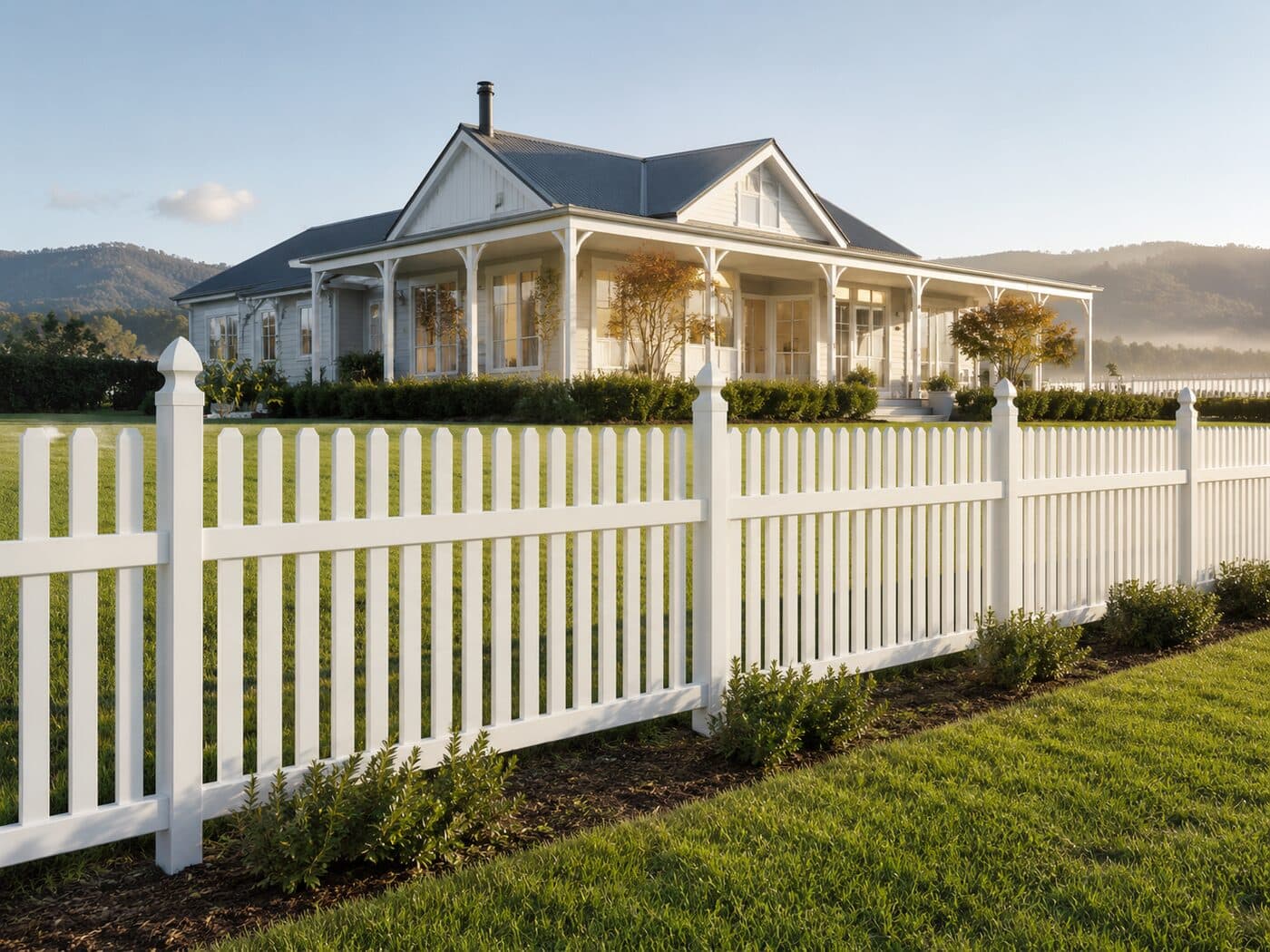
The crisp white picket that defines the Hamptons look, in a material that holds the white. No repainting, no chalking, no grey creeping in by the third summer.
What actually makes a fence read Hamptons
Plenty of white fences are not Hamptons fences. The style is specific, and it comes down to four things that are easy to get wrong and easy to get right once you know they are the variables.
Height, first and most important. A Hamptons fence sits below the eye line, at roughly 1.2 metres. The whole point of the style is that the house and garden are visible over the top of the fence, framed by it. The fence marks the boundary and does nothing else. This is why a taller white picket never works: the moment the fence starts hiding the house, it has stopped doing the job the style asks of it.
Rhythm. Evenly spaced vertical palings with a gap roughly the width of a picket. That regular beat down the frontage is what your eye actually reads as Hamptons. Wide gaps read rural, and tight gaps start reading as a screen.
A defined top line. The tops of the pickets should agree with each other. A pointed cap gives you the fine repeating peak of the traditional New England picket; a flat cap gives a crisper, more contemporary line. Either works. What does not work is a top that wanders.
Crisp, consistent white. Not cream, not off-white. And consistency matters as much as the shade: a painted timber fence drifts between batches and touch-ups, and by the time one section has been repainted twice it no longer matches the run beside it. A moulded white does not have that problem.
Which picket to choose
All three Henley pickets are 1.2m white PVC, so any of them will get the height right. The difference is the top of the paling, and for this style they are not equally good.
The classic
Pointed Cap
The traditional New England picket profile, and the closest thing we make to a textbook Hamptons frontage.
The modern read
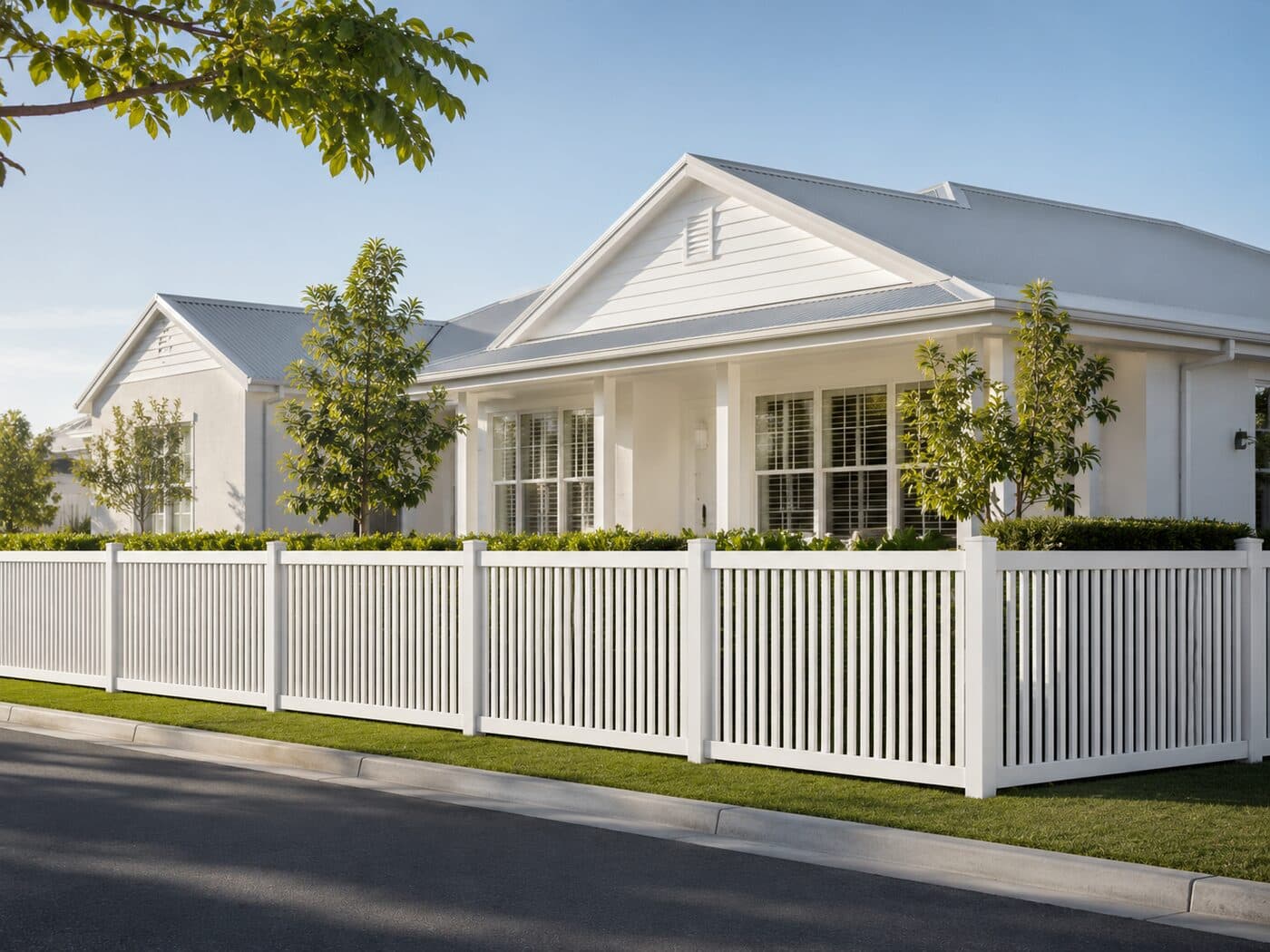
Flat Cap
A cleaner, squarer top line. Works beautifully against newer coastal builds with simpler detailing.
Decorative
Square Alternating
Alternating heights break the regular rhythm, so it reads more cottage than Hamptons. Lovely fence, different style.
The front fence is only half the job
A Hamptons picket is a front-boundary fence. It is open by design, it is 1.2m, and it will give you no privacy whatsoever. That is not a shortcoming, it is the style working as intended. But it does mean the sides and rear of the property need a different answer, and the temptation to run the picket the whole way around is worth resisting.
The range that carries the Hamptons feeling into a taller fence is the Eton closed-top. It keeps the same white and adds a decorative finished top rail, so a side boundary at 1.8m still reads as a considered fence rather than a wall. Where you want the yard fully screened, the Ascot full privacy range is the one to use.
Every range shares the same white and the same post system, so the transition from picket to privacy happens on a single shared post without an awkward join or a colour mismatch.
Why the Hamptons look and painted timber are a bad marriage
Every style has a way it goes wrong, and for this one it is the white going off. A Hamptons frontage is judged almost entirely on how clean it looks, which means a painted timber picket is being asked to hold a perfect white finish in full Australian sun, at ground level, through humidity and coastal salt.
It does not hold. The paint chalks within a couple of summers, the palings nearest the soil draw up moisture and rot at the base, and the fence needs sanding and repainting every three to five years to stay convincing. In PVC the white is through the material, so the only maintenance the look needs is an occasional hose-down. For a style defined by looking freshly painted, that is a material choice that matters more than usual.
What a Hamptons frontage costs
A Henley picket section starts from $130.34 a section including GST, covering the panel, a post and a cap. Because a Hamptons fence is low, it is one of the more affordable frontages you can build: there is less material per metre than in any privacy fence. The variables are the length of your frontage and the number of gates. The cost guide has the full breakdown, or you can draw your frontage on a map and get an exact number.
Frequently asked questions
What is a Hamptons style fence?
What height should a Hamptons fence be?
Is PVC good for a Hamptons fence?
Which picket style is the most Hamptons?
What colour should a Hamptons fence be?
How much does a Hamptons PVC fence cost?
Can I get a matching Hamptons gate?
Does a Hamptons fence suit a modern Australian house?
Price your Hamptons frontage
Draw your front boundary on a satellite map of your property and get an instant quote, with transparent pricing and no hidden costs.
Get your free quote