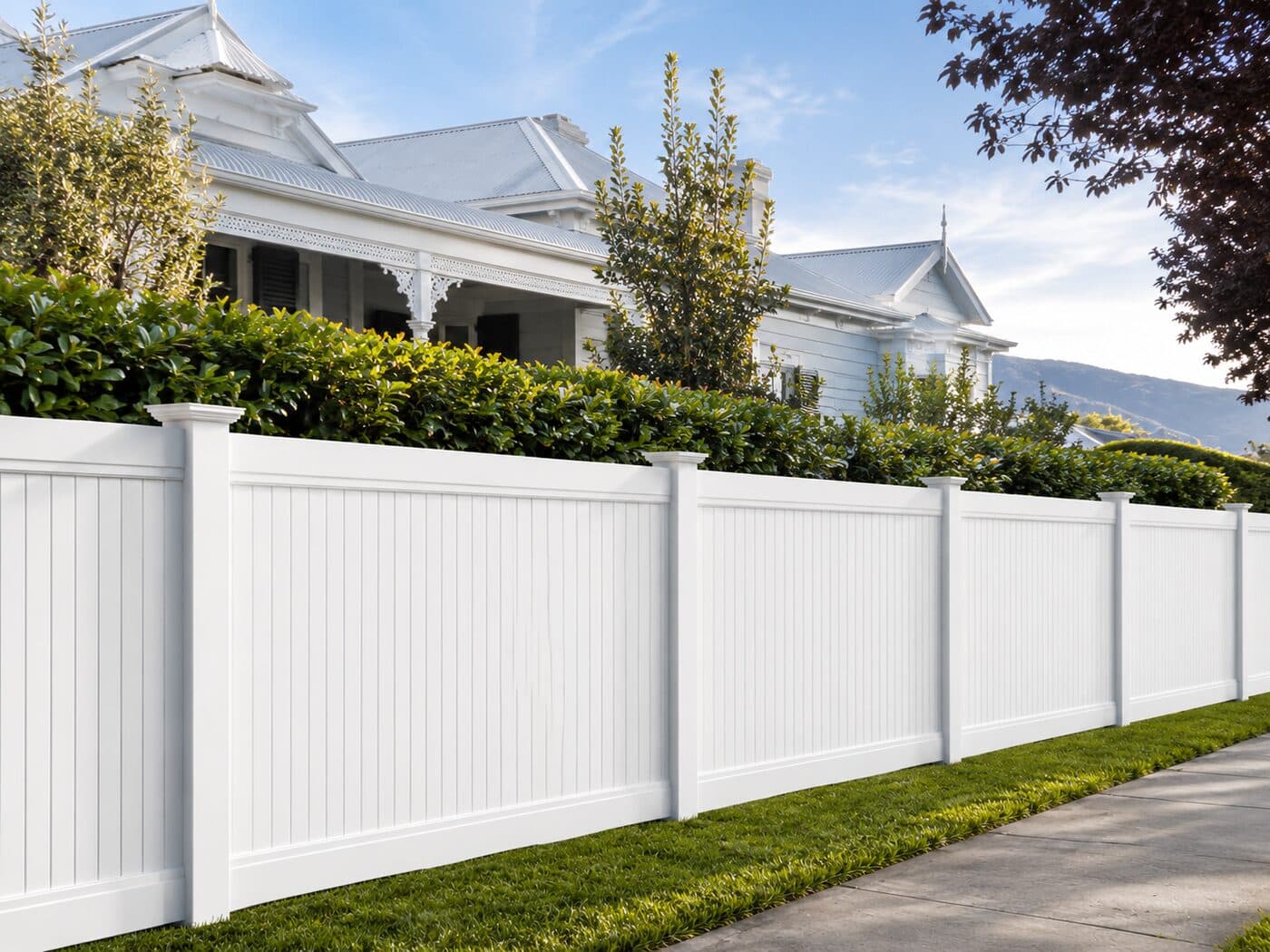
PVC Fencing Panels
Five panel styles, from a 1.2m picket to a wind-rated 2.4m privacy panel. Real sizes, real prices, and a straight answer on how many you actually need.
A panel is not a fence
This is the thing that catches people out, so it is worth being blunt about. When you buy a fence panel you are buying the infill: the flat section of fence that spans the gap between two posts. You are not buying the posts, and you are not buying the caps that finish the top of each post. Those are separate items, and they have to be, because the number of posts a fence needs depends on its shape rather than on how many panels it has.
A straight twelve metre run takes five panels and six posts. Put a right-angle corner in the middle of that same twelve metres and you still have five panels, but now you need seven posts, because a corner needs its own. Add a gate and you need two more, one on each side, both carrying more load than a line post does.
It is the most common way a self-managed fence order comes up short: the panels arrive, the posts do not, and the job stops. Every quote we produce prices the complete set, panels, posts and caps counted from the actual shape of your boundary, so there is nothing left to work out on the driveway.
Panel sizes across the five ranges
Every range shares the same post-and-slot system, so panel widths are consistent and post spacing is predictable. What changes is the height and the amount of privacy the panel gives you.
| Panel | Heights | Panel width | Posts | Privacy | From, per section |
|---|---|---|---|---|---|
| Picket FencingHenley range | 1.2m | 2.413m | 101.6mm | 10% | $130.34 |
| Semi-Privacy FencingOxford range | 1.8m, 2.1m, 2.4m | 2.440m | 127mm | 60% | $243.80 |
| Closed-Top FencingEton range | 1.8m, 2.1m, 2.4m | 2.440m | 127mm | 70% | $255.44 |
| Full Privacy FencingAscot range | 1.8m, 2.1m, 2.4m | 2.440m | 127mm | 100% | $243.58 |
| Horse & Farm FencingCotswold range | 0.9m (2-rail), 1.3m (3-rail) | 2.440m | 127mm | 0% | $61.35rails, post and cap |
Prices are for one complete section at each range's entry height, including GST: the panel, one line post and one cap. Privacy is the share of the panel face that is solid. The Cotswold is the exception to the panel part, because a post and rail fence has no infill panel: its section is the rails, the post and the cap.
PVC, vinyl, or plastic?
All three words describe the same panel. PVC stands for polyvinyl chloride, which is where vinyl comes from as a shorthand, and plastic fencing is what most people say when they are describing it to a neighbour. Australian suppliers generally say PVC, American ones generally say vinyl, and the difference is regional habit rather than product.
The distinction that does matter is not in the name. It is whether the panel is UV-stabilised for Australian sun and how much of the wall thickness is virgin material rather than filler. A cheap panel and a good panel can carry the identical label. Ours are made to hold their colour and their impact strength through Queensland summers, which is the whole reason the warranty can be what it is. Our durability guide covers what that stabilisation actually does.
Working out how many panels you need
Measure the total length of the fence line, divide by the panel width, and round up. Thirty metres of Ascot at 2.44m a panel is 12.3, so thirteen panels. Then count posts: one more than the number of panels on a straight run, plus one for every corner and two for every gate. Add a cap for every post.
The rounding up is not waste. The final panel in almost every run has to be trimmed to meet the last post, because boundaries are rarely an exact multiple of 2.44 metres. Plan for one cut panel per run and you will be right nearly every time.
Which panel suits which boundary
Most properties want more than one. A picket panel across the front frames the garden and keeps the street presence open. A full privacy panel down the sides and rear is where the actual screening happens. If you want the yard private but still want airflow, which matters more than people expect on a hot block, the semi-privacy panel splits the difference.
Because every range runs on the same post system, panels from different ranges can share a fence line. You can turn a corner from picket to privacy on a single post without an awkward join. The range comparison guide walks through the decision properly.
Frequently asked questions
What is included in a PVC fence panel?
How wide is a PVC fence panel?
Can I buy PVC fence panels individually?
Are PVC fence panels the same as vinyl fence panels?
How many fence panels do I need?
Can PVC fence panels be cut down?
Do PVC fence panels come in colours other than white?
Are PVC panels strong enough for a boundary fence?
Get the panel count right
Draw your fence line on a satellite map of your property and we will count the panels, posts and caps for you, and price the lot.
Get your free quote